A failing dream of a new Russian empire?
I read an article in a Swedish evening newspaper written by the reporter Niclas Vent. Felt a bit sorry for him as the answers he got were so shallow and general. He deserves a greater depth from the Swedish academic collective.
This article is a way for me to explain my view of what will directly and indirectly drive developments within the Russian Federation with the events now unfolding in the Russian power structure and what forces are important to describe.
The fact that the split has now openly started with a speech in the Russian parliament in October and a decision by the Russian central bank a few days later. The two events, and their continuation, have also given other stakeholders the space to voice a cautious internal low-key criticism of economic development and its priorities.
A state that has lived under autocracy or a power diaspora for several generations creates its own language of power. A language where words that are not said have more influence and words that are openly discussed have less.
In the West, we have a more open debate where it is more visible who says what and is singled out by the words. However, it is more unclear what the words really mean and what their significance is and, above all, why those particular words have been used.
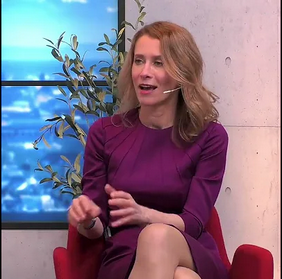
Swedish reporters often report the threats Russia is making against Europe, but the media do not see the underlying need to create these targeted threats. Perhaps a person who has more personal knowledge of what these threats are could enhance an upcoming conversation.

Opens in a new page
Reporters who only describe these threats without an underlying context and analysis of when they were made are indirectly doing themselves a disservice. They reinforce the uncertainty created around the threats.
An example:
“President Putin says that Russia will arm itself against Finland. We had absolutely ideal relations with Finland. In my opinion, they would have been better off staying neutral,” says Russian President Vladimir Putin in an interview on Russian state television. "He says joining NATO was a completely pointless move, especially to promote the country's national interests. We had no troops or weapons systems there, now we will have it”.…
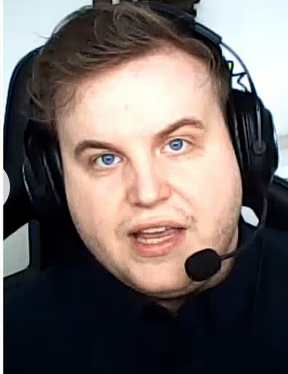
Kastehelmi believes that Russia, in the midst of the ongoing war, will not be able to replace losses and at the same time expand bases towards Finland. “In Finland we are not worried, of course we have to observe changes, but empty threats from Putin will not become reality, at least not in the short term,” says Emil Kastehelmi
In Swedish
open in a new page
There is another person who, at a New Year's Eve concert in Moscow, describes the threat of nuclear weapons in a way that we don't report on. Gordon Matthew Thomas Sumner CBE, known as Sting. In 2017 he was awarded the Polar Music Prize.
What this performance is about is that a nuclear threat to the outside world also means the annihilation of one's own nation and the futility of the threat. But there is a New Year's caramel clip (1.44 minutes), those who recognize the person knows what Oppenheimer's deadly toy has meant to him.
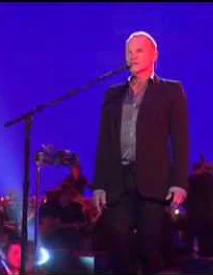
Sting (Стинг) - Russians (LIVE) в рамках новогоднего “Оливье-шоу” на Первом канале (31.12.2010 - 01.01.2011). Sting in Moscow!
Internal Russian state transformation.
Right now, there is an unreported internal conflict in the Western media between the three central players in the Russian economy, with the President as an uncertain referee. Who should he choose and who should go?
The president
Civil/industrial society → Central Bank → Defense economy
We can see in the industrial/civil society today who are the winners and who are and will be the losers. The sector that will have the best conditions and increase are those directly linked to the defense economy.
According to the public figures, unemployment in Russia is around 2-4%. Defense and civilian industries compete with each other for human resources. In a defense economy with such low unemployment, there is a need to free up resources in civilian industry.
It is the same allocation of resources that Stalin carried out in the 1940s to reshape the defense complex to the east. Adding human biomass to sustain the war economy. In a war economy, expendable human biomass is prioritized above all else.
There is no other way to explain the Russian societal losses than that the Russian elite see their population as a human biomass to be exploited in their self-interest.
What will determine the further growth of the defense economy is how much pain and hardship the Russian people can endure. At a certain point, the people will ”turn the coats” on them. That change begins with a breakdown in the political elite
Note: "turning the coat" means breaking loyalties.
The Ukrainian narrative of Moscovia
There is a Ukrainian narrative that I think we have not exploited. Moscovia and Mocovians.
A citizens' proposal was submitted to the Ukrainian Parliament in 2023 to introduce the term as a distinctive concept in the speech about the Russian Federation.
It is actually a play on words to distinguish the historic village of Moscovia, which today is the capital of the Russian Federation, from the historic capital Kiev.
Dare we in the West entertain the idea that Moscovia is holding the Russian Federation hostage and see it like this. The Moscovian president and his inner circle know that time is running out. That the economy may collapse. It's just a matter of keeping it alive at all costs for as long as possible.
Hoping that the West will back down and an artificial kind of peace can be created that internally within Russia looks like a victory. That the change of president in the US changes the game plan.
Then the Mocovian empire building can recover and then resume empire building and maintain its power structure within the federation.
At the moment, it is probably more fear of what might happen that is driving Moscovia in this internal power game about being able to finance the defense economy. That an existential threat could sail up into the gloomy gray sky of worry.
What is unclear to them, however, is what, who or whom is willing to create the threat that is driving the fear.
Now I want to apologize to Vlad Velxer. I know he is a big fan of Nina Simone and she has the song “Sinnerman”. There is a cover that a Swedish artist Jerry Williams (RIP 2018) has done and it really captures the feeling of the nightmare of the Moscovian elite.
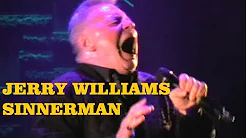
The Youtube clip is created by Johnkult (https://www.youtube.com/@Johnkult/featured in his channel you will find many clips from the Swedish live scenes ).
Thank you for reading and listening.
Lars-Erik Jonsson.